 PO Box 930 Revesby New South Wales (NSW) 2213
PO Box 930 Revesby New South Wales (NSW) 2213
PO Box 930 Revesby New South Wales (NSW) 2213
PO Box 930 Revesby New South Wales (NSW) 2213
PO Box 930 Revesby New South Wales (NSW) 2213

Best Price Guaranteed

Free Quotes

On-Time Completion

No Hidden Fees
Demolition Sydney CBD work means commercial jobs rather than house knockdowns: tenancy strip-outs, make goods at the end of a lease, and partial demolition inside buildings that stay open. Super Demolition takes that work in Sydney 2000 under a current Demolition Licence and a current Asbestos Removal Licence. The site assessment and the written quote cost nothing.
Sydney CBD is what people say. It is not a gazetted New South Wales locality, and does not exist in the records a demolition is assessed against. The State and national suburb layers return nothing for any name containing CBD, and the address file holds none either. Across the 24,202 applications on the City of Sydney’s own planning record, the term never appears once.
What exists is Sydney, postcode 2000, with the Council of the City of Sydney as consent authority. A demolition is assessed against a street address, not a name, so the building, the level and the number are what we work from.
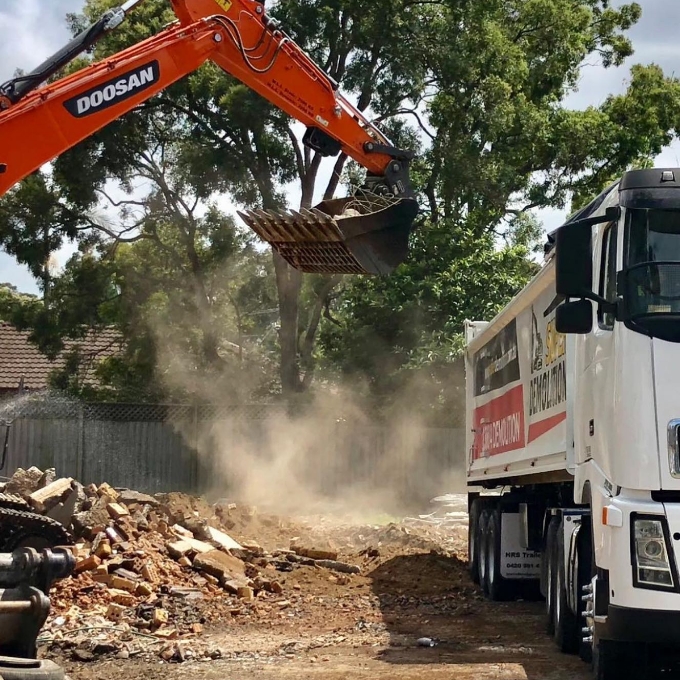
Almost nothing here is a house coming off a block. The work is commercial: a tenancy taken back for the next occupier, a make good at the end of a lease, or partial demolition with the rest of the floor working.
What comes out is the fitout: ceilings, partitions and glazing, joinery, floor coverings and the services through them. What stays is the slab, the columns, the core and the fire systems.
Asbestos does not announce itself in a fitout: it sits in old floor adhesive, in board behind a bulkhead, in lagging above a ceiling. Where it appears it comes out under our own licence, not as a second contract.

Jack owns the business and usually walks the space with you. Super Demolition is family owned and managed, with over 30 years of experience behind the crews. Its review score is 5.0 across 84 reviews. Before letting any contractor into an occupied building, ask for:
The site assessment and the written quote are free, and every enquiry is answered within 24 hours. Call 0455 888 819 with the building, the level and what is coming out.
A complying development certificate is issued by an accredited private certifier against a fixed code: the proposal meets every standard in it, or it does not. A development application goes to the Council of the City of Sydney instead, assessed on merit and approved with conditions or refused.
For the postcode itself the certificate route is much the busier: the record holds 104 development applications against 225 complying development certificates. That is a certificate share of 68.4%, against 36.8% across the council area as a whole. A private certifier rather than the council issues 88.7% of them.
Two cautions. Eligibility follows the land and the scope of works, not preference, so mapping over your address can close that route. And 29.4% of the council’s demolition applications are modifications of consents already granted, the highest share measured here, so the totals overstate new work.

Floor area is the first number anyone offers us and close to the last thing that settles it. Inside a city building more comes from the constraints: what the fitout is built from, what turns up behind the linings, how material leaves the floor, and what the owner wants put back.
None of that reads off a plan, so somebody walks the space first, at no cost. The written quote itemises the works, the approvals and the disposal, and that figure is what you pay: no hidden fees, nothing added later as a variation. Holding a written quote from another contractor? We will beat it.
Super Demolition is not a city based contractor and makes no claim to be. There is no office of ours in the postcode, no work of ours to point at on the block next to yours, and the suburbs listed elsewhere on this site are not neighbours of the city centre.
Whole buildings coming down in the city are the province of firms running hundreds of staff. What we take is tenancy scale: a suite, a floor, a shop, part of a level, a make good with a date on it. If it is a whole building, we will say so rather than quote it.
A single floor, a single suite, or part of one. Tenancy scale work is what we are licensed and equipped for, and it is most of what gets approved here.
Less than it looks. A large share of those records are modifications of consents already granted, not fresh proposals, so one job can appear more than once as its scope changes. Read the register as approvals being re-scoped, not buildings falling over.
Three separate ones, and none replaces another. The consent authority’s, by certificate or development application. The owner’s or head lessee’s, under what your lease says about alterations and make good. And the building’s own: access, protection, waste routes and working hours. We handle the first and work inside the other two.
Only to the wording, never to the works. The term is in everyday use but it is not a gazetted locality, and it never appears once across the 24,202 applications on the City of Sydney’s planning record. The entity underneath the nickname is Sydney, postcode 2000, and we lodge on your street address.
Get a Response With in 24 Hours.
A city job is settled by the building far more than by the suburb: what is behind the linings, what the owner expects handed back, and which route your scope can reach. None of it is guesswork once someone has stood in the space. Send us the building, the level and when the tenancy goes back, and you will get the route, the scope and the price in writing. Call 0455 888 819 or email info@superdemolition.com.au.


 info@superdemolition.com.au