 PO Box 930 Revesby New South Wales (NSW) 2213
PO Box 930 Revesby New South Wales (NSW) 2213
PO Box 930 Revesby New South Wales (NSW) 2213
PO Box 930 Revesby New South Wales (NSW) 2213
PO Box 930 Revesby New South Wales (NSW) 2213

Best Price Guaranteed

Free Quotes

On-Time Completion

No Hidden Fees
Homebush West is two places at once: Parramatta Road frontage, and the residential streets behind it. Super Demolition works both under a current Demolition Licence and a current Asbestos Removal Licence, from knockdowns and partial demolition to strip-outs and asbestos removal. Every demolition Homebush West owners ring us about starts with which of the two the address sits in.
Homebush West sits in postcode 2140, and Strathfield Municipal Council assesses demolition at every address inside it. Homebush carries the same postcode, so your rates notice cannot say which of the two your block is in. Homebush Bay is not a gazetted suburb at all.
By land area, the state mapping puts a small edge of Homebush West, under four per cent of it, inside Cumberland Council. That is a boundary artefact, not a working split: on the harvested registers, no Homebush West demolition record was assessed by Cumberland.
The NSW Planning Portal registers for Strathfield Municipal Council carry 24 demolition applications and certificates at Homebush West addresses. Thirteen are on Parramatta Road, across six separate frontages, and the work there is warehouses, distribution buildings, offices and shopfronts. No other street here comes close.
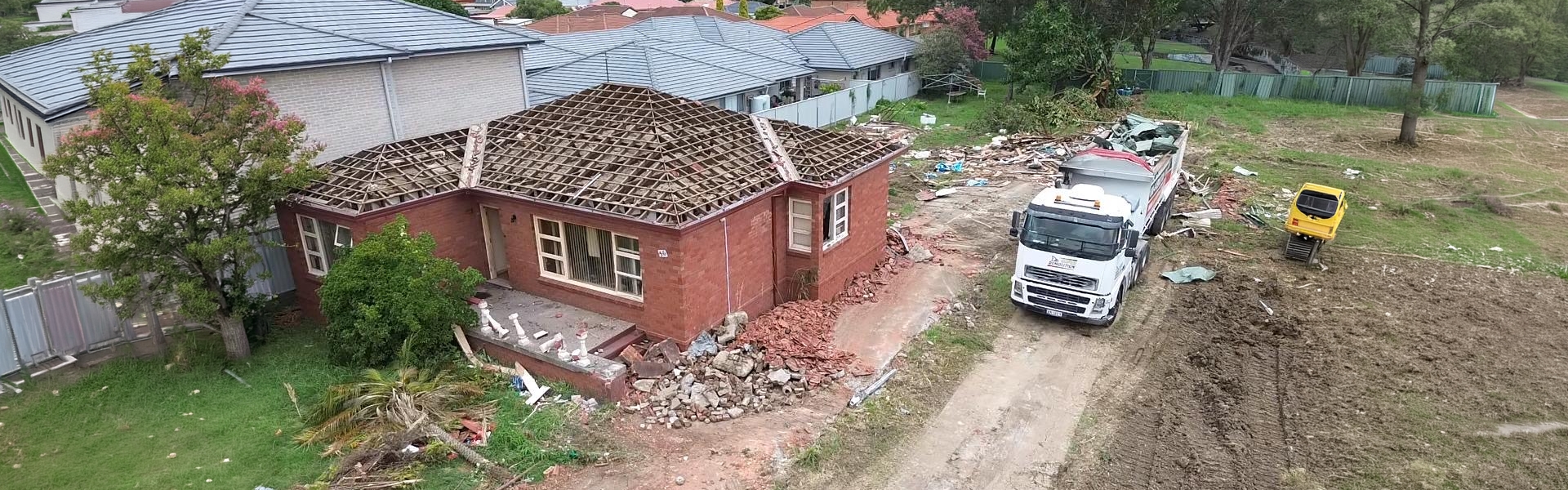
The other eleven sit on Kessell Avenue, Telopea Avenue, Tavistock Road, Marlborough Road, Hampstead Road and Richmond Road. Ten records are typed industrial or commercial and five residential. A project record published for Homebush West puts the housing side plainly: demolition of existing fibro cottages, then bulk excavation through overburden, shale and hard material. Fibro means asbestos cement until a survey says otherwise.

Jack owns the business and usually meets you on site. Super Demolition is family owned and managed, with over 30 years behind the work and a 5.0 rating from 84 reviews. Ask us, and anyone else you consider, for a current Demolition Licence, a current Asbestos Removal Licence, and WorkCover compliance to Australian Standard AS 2601-2001. The rest sits with our residential demolition service.
The site assessment and written quote are free, and every enquiry is answered within 24 hours. Call 0455 888 819 to book a time.

New South Wales gives you two routes. A complying development certificate is issued by a private certifier against a fixed code, with nothing weighed up: the land and the proposal meet every standard in it, or they do not. A development application goes to Strathfield Municipal Council, assessed on merit, open to conditions or refusal.
Here the council route is busier. Seven of the local records are certificates; the other seventeen sit in the development application register. Eight of those seventeen are not fresh proposals but applications to modify a consent already granted, a third of the file spent changing something after approval. Across the Strathfield council area, 91.6% of demolition certificates came from a private certifier.
What decides your route is the land and what goes back on it. A knockdown on unconstrained land often qualifies; one tied to a subdivision, a dual occupancy or a mapped constraint usually does not.
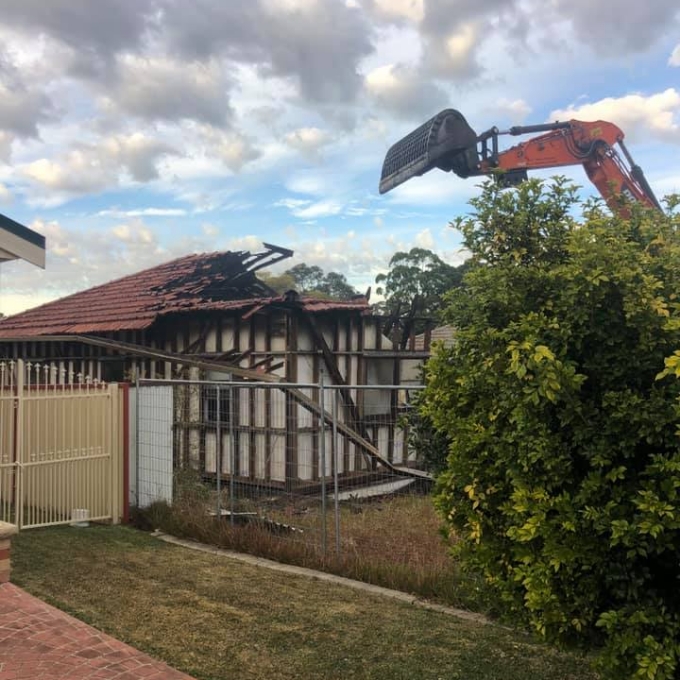
On the residential streets a full demolition takes the cottage, the garage, the shed, the paving and the slab. A partial one takes a rear wing or an upper level and leaves the rest braced and standing, often with multi dwelling housing going back on the block afterwards.
On the road frontage it is different work: warehouses, office space and tenancies taken back to base build, which is our commercial demolition service. Buildings of both kinds here are old enough to hold asbestos, and if it appears it does not become a second contract. It comes out under our own licence, and our asbestos removal service sets out how.
None of this is yours to chase:
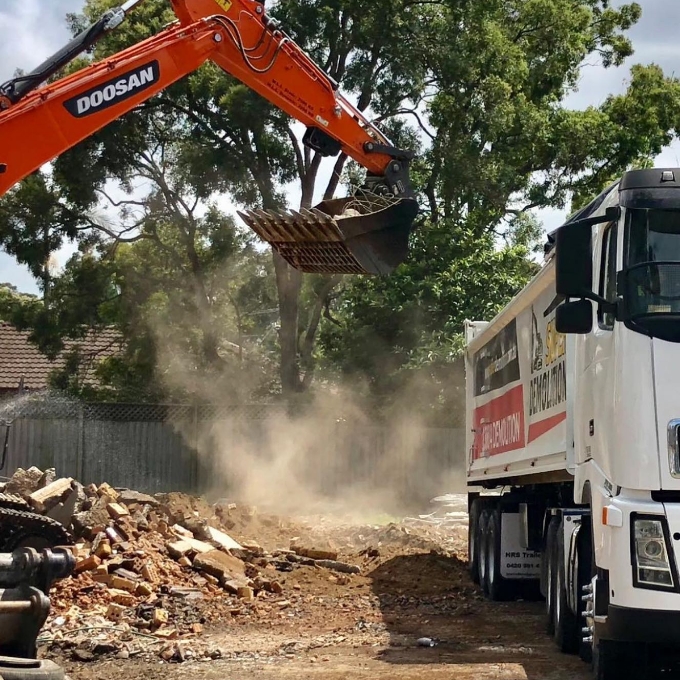
A highway frontage means staged access, hoarding, and a structure built to carry load. A back street means a narrow driveway, close neighbours, and plant that has to fit the gap. Same suburb, same council, almost nothing shared between the two quotes.
What moves the figure is what the building is made of, whether asbestos is in it, how trucks reach the block, and how much material is recycled rather than tipped. None of that shows in a floor area, which is why we will not price a job nobody has stood on. The written quote itemises works, approvals and disposal, and that figure is what you pay: no hidden fees, no variations. Holding a quote from someone else? We will beat it.
We take demolition, excavation and asbestos work across Inner West Sydney, including:

No. A consent was granted, then altered, so the applicant went back to the council. The usual cause is a scope drawn before anyone measured the site, so a shed, a slab or a pool ends up inside the works and outside the consent.
The published project record for this suburb lists bulk excavation through overburden, shale and hard material straight after the demolition. Hard ground here is recorded, not guessed at. It changes the plant we bring, and we say so before you sign.
That is an access question, not a planning one, and it is settled early. A Parramatta Road frontage is hoarded, staged and scheduled around the traffic, not through it. On the streets behind, driveway width sets the limit.
It did not proceed. The council considered renaming Homebush and Homebush West and voted against it, so the name on your title and your application is unchanged. It would have changed nothing anyway: the consent authority follows the boundary, not the label across it.
Get a Response With in 24 Hours.
Homebush West splits down the middle, and the half you stand on decides most of what follows: the building type, the approval route, how plant reaches you, what sits under the slab. None of that is answerable from the suburb name. Send us the street and number, and the route and price come back in writing. Call 0455 888 819 or email info@superdemolition.com.au.


 info@superdemolition.com.au